
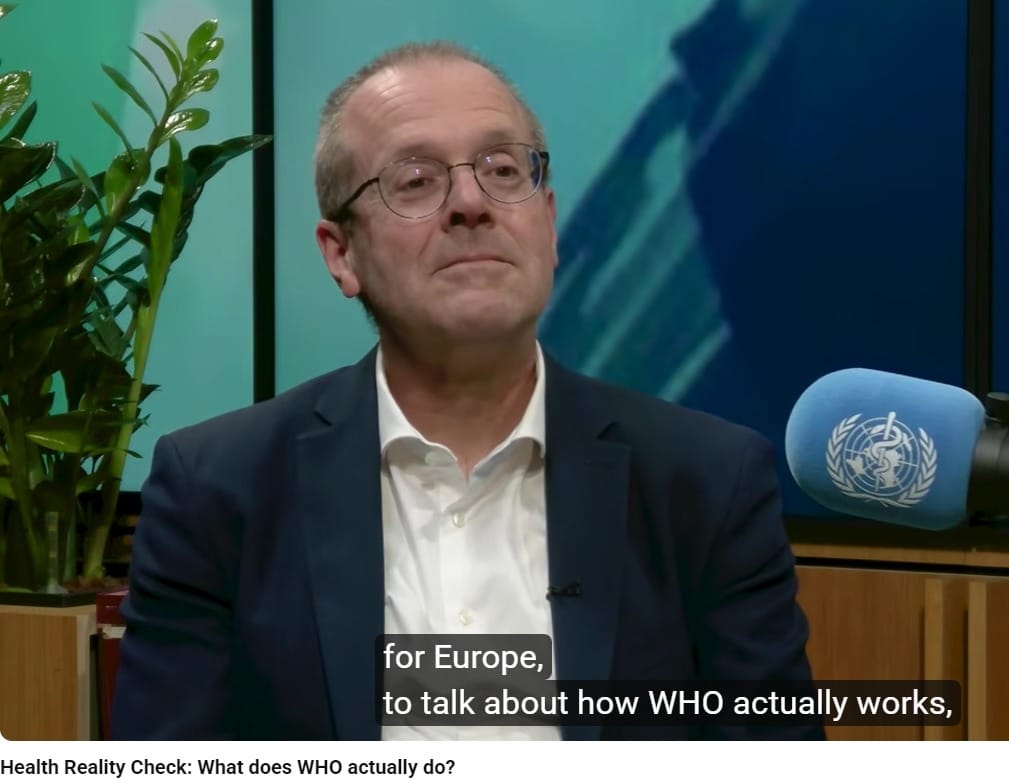
Hans Kluge on the Role of WHO and Key Challenges Facing Modern Healthcare
In a new episode of Health Reality Check, Dr. Hans Kluge, Regional Director of the World Health Organization (WHO) for Europe, spoke about how WHO works with countries, how scientific evidence informs health policy decisions, and why public trust in health institutions has become particularly important today.
As Hans Kluge noted, the mission of WHO is “Health for All.” The Organization does not determine national policies. Instead, it brings together scientific evidence and international experience, develops recommendations, and supports countries in adapting them to their national priorities and the specific characteristics of their healthcare systems.
The interview places particular emphasis on the Health in All Policies (HiAP) approach. Population health depends not only on the quality of healthcare services, but also on education, living conditions, the environment, social policies, and many other factors. Addressing today’s public health challenges therefore requires cross-sectoral cooperation and shared responsibility.
Among the major challenges facing the European Region and Central Asia, Hans Kluge highlighted health inequalities, maternal and child mortality, cardiovascular and other noncommunicable diseases, tuberculosis, HIV, as well as mental health. Strengthening primary health care, prevention, and early detection of diseases remains one of the key approaches to addressing these challenges.
The interview also addresses the importance of scientific independence, transparency, and trust. The experience of the COVID-19 pandemic demonstrated how essential it is to communicate with the public in clear and accessible language, to be transparent not only about established facts but also about existing scientific uncertainties, and to update recommendations promptly as new evidence becomes available.
Speaking about the future of healthcare, Hans Kluge emphasized the important role of the next generation of doctors, nurses, and other health professionals. Educating and training professionals who are able to work based on evidence, understand health in its broader social context, and communicate effectively with society remains one of the key conditions for the sustainable development of healthcare systems.
The interview addresses issues that are directly relevant to the current priorities of public health and health workforce education, ranging from disease prevention and strengthening primary health care to evidence-informed policymaking, cross-sectoral collaboration, and building public trust in the healthcare system.